
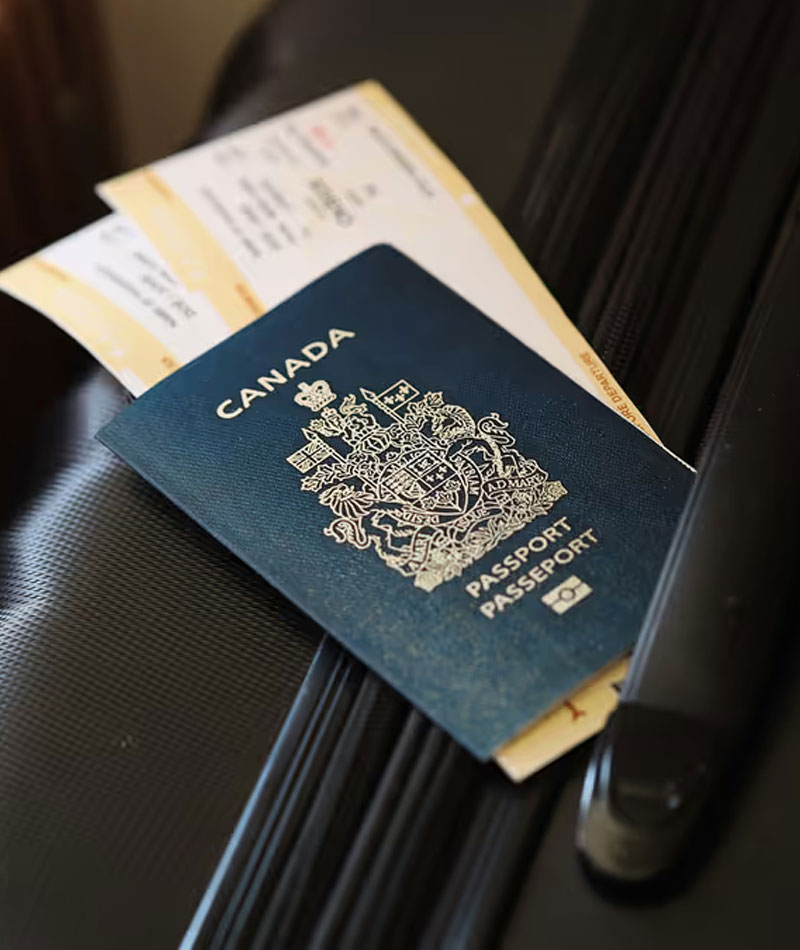
Move to Canada Smarter

Strategic pathways to Canada PR through approaches tailored to your profile — from Express Entry to French language routes.

About Amica Immigration India.

Amica Immigration India is an independent immigration consultancy dedicated to helping students and professionals build a successful future in Canada.

We offer end-to-end guidance across multiple immigration pathways including PR, study, and temporary visas. Our specialization lies in helping candidates secure Canada PR through strategic routes such as Master’s/PhD programs and French language proficiency.
Our approach is personalized, transparent, and focused on long-term success. With the help of experienced and licensed experts in the field, we ensure every candidate receives reliable and up-to-date guidance.

Services — Every Route to Canada

Hover over any card to learn more. We guide you through every immigration pathway with clarity and expertise.

Permanent Residency (PR)

Live and work in Canada indefinitely. The most sought-after immigration goal.

Permanent Residency (PR)

PR allows foreign nationals to live, work, and study in Canada indefinitely with most rights of citizens. PR holders access healthcare, social benefits, and can apply for citizenship after meeting residency requirements.

Citizenship

The final step — become a Canadian citizen and enjoy full rights.

Citizenship

Citizenship is the full legal status granted after meeting residency requirements — giving you the right to vote, hold a Canadian passport, and enjoy complete freedom to live, work, and travel as a Canadian national.

Study Visa

Study at world-class institutions and build a direct pathway to Canadian PR.

Study Visa

Study Visa lets international students pursue education at Designated Learning Institutions in Canada. Students can work part-time and may qualify for a Post-Graduation Work Permit (PGWP) — a direct route to PR.

Super Visa

Bring your parents or grandparents to Canada for extended stays.

Super Visa

Super Visa is a long-term multiple-entry visa for parents and grandparents of Canadian citizens or PRs. It allows stays of up to 5 years per visit and requires proof of Canadian financial support and medical insurance of at least $100,000.

Spousal Visa

Reunite with your spouse or partner in Canada through family sponsorship.

Spousal Visa

Spousal Visa allows the spouse or common-law partner of a Canadian citizen or PR to join them through family sponsorship. Applicants may receive an open work permit while their PR application is processed, typically within 12 months.

Visitor Visa

Visit Canada for tourism, family, or short-term business purposes.

Visitor Visa

Visitor Visa (Temporary Resident Visa) allows foreign nationals to travel to Canada for tourism, family visits, or short business trips. Usually granted for up to 6 months per visit, with the possibility of extension from within Canada.

Ready to start your Canada journey?

We’re here to guide you every step of the way.

Our Expertise

Three core areas where our expertise makes the biggest difference to your Canada journey.

PR Strategy & Planning

Personalized roadmap and end-to-end guidance for Canada PR success. We assess your profile, estimate your CRS score, and chart the fastest, most reliable route to permanent residency.

Study in Canada

Complete support for Canadian institution selection, admission documentation, and study visa processing. We help you choose programs that strategically align with post-graduation PR pathways.

French Language Guidance

Expert coaching and guidance to build French language proficiency for TEF/TCF Canada. Strong French skills add up to 50 CRS points and unlock exclusive Francophone immigration draws.

Start Your Canada Journey Today.

Book a free consultation with our immigration experts. We’ll assess your profile and suggest the best pathway for your Canada PR goals.

Book Your Free Consultation

Insights & Updates

Expert articles on Canada immigration to help you stay ahead and make informed decisions.

Understanding Express Entry Better

A complete guide to Canada’s Express Entry system, eligibility, CRS score, and how to improve your chances of receiving an ITA.

Canada’s Express Entry system is one of the most efficient immigration pathways in the world. Introduced in 2015, it manages applications for three key federal economic programs and uses a points-based ranking system to select the best-suited candidates for permanent residency.

What Is Express Entry?

Express Entry manages applications under three programs:

  • Federal Skilled Worker Program (FSWP) – for skilled workers with foreign work experience
  • Canadian Experience Class (CEC) – for those with Canadian work experience
  • Federal Skilled Trades Program (FSTP) – for qualified tradespeople

How Does the CRS Score Work?

The Comprehensive Ranking System (CRS) assigns points based on your age, education, language proficiency, work experience, and whether you have a valid job offer or provincial nomination. Scores range from 0 to 1,200. IRCC holds regular draws and invites candidates above the cut-off — general draws historically range from 480–550+, while category-based draws can be significantly lower.

Key Tips to Improve Your CRS Score

  • Take or retake IELTS — even a band improvement adds significant points
  • Consider adding French — bilingual candidates earn up to 50 extra CRS points
  • Pursue a Canadian post-secondary credential or PGWP
  • Explore Provincial Nominee Programs (PNPs) — a nomination adds 600 points
  • Secure a qualifying job offer from a Canadian employer

How Long Does It Take?

Once an ITA is received and a complete application is submitted, IRCC aims to process Express Entry applications within 6 months. Building your profile and receiving an ITA may take anywhere from 3 months to over a year depending on your score and draw frequency.

How French Can Boost Your Canada PR Chances

Learn how French language proficiency gives you an edge in Express Entry and PNP draws — and steps to get started.

Many Indian applicants overlook one of the most powerful tools available in the Express Entry system — French language proficiency. Canada’s commitment to bilingualism means that candidates with strong French skills receive substantial advantages in the immigration process.

Why Does French Matter for PR?

The Canadian government actively encourages Francophone immigration outside Quebec. IRCC has introduced French-language-specific draws with significantly lower CRS cut-offs, giving French-proficient candidates a much higher chance of receiving an Invitation to Apply (ITA).

CRS Points from French

Bilingual candidates (strong in both English and French) can earn up to 50 additional CRS points — a massive advantage in competitive draw rounds. Even moderate French proficiency (CLB 7) combined with solid English can unlock these bonus points.

French Language Tests for Canada Immigration

  • TEF Canada – Test d’évaluation de français
  • TCF Canada – Test de connaissance du français

Francophone Draws — A Real Advantage

IRCC has increasingly held category-based draws exclusively for French-language speakers. These draws often have cut-offs of 340–400, compared to 470–540 in general draws — making French one of the smartest investments for aspiring immigrants.

How to Get Started

  • Enrol in a structured French coaching program (A2 → B2 in 6–12 months is achievable)
  • Focus on TEF Canada’s specific format and scoring criteria
  • Pair French proficiency with a strong IELTS score for maximum CRS benefit

Study in Canada: Your Gateway to Permanent Residency

How a Canadian study permit and post-graduation work permit builds a strong, direct pathway to permanent residency.
For thousands of Indian students, studying in Canada is not just about getting a world-class education — it’s a deliberate, strategic step towards permanent residency. The study-to-PR pathway is one of the most reliable routes to calling Canada home.

Why Studying in Canada Helps Your PR

Canadian credentials carry significant weight in the Express Entry system. Completing a post-secondary program in Canada (typically 2+ years) allows you to apply for a Post-Graduation Work Permit (PGWP) — one of the most valuable factors for PR.

The Study → PGWP → PR Pipeline

  1. Apply to a Designated Learning Institution (DLI) — choose a program aligned with in-demand NOC codes
  2. Get your Study Permit — Student Direct Stream (SDS) for faster processing
  3. Work part-time during studies — permitted during academic sessions
  4. Graduate and apply for PGWP — valid for up to 3 years based on program length
  5. Gain Canadian work experience — qualify for Canadian Experience Class under Express Entry
  6. Apply for PR — with a strong CRS score boosted by Canadian education + experience

Key Documents for a Canada Study Visa

  • Letter of Acceptance from a Designated Learning Institution (DLI)
  • Proof of funds (tuition + living expenses)
  • Language test results (IELTS/TOEFL/DELF)
  • Academic transcripts and certificates
  • Valid passport
  • Statement of Purpose (SOP)

Choosing the Right Program

Programs at colleges and universities that are at least 8 months long qualify for PGWP. Choosing a field in high demand — healthcare, IT, engineering, skilled trades — maximizes your PR prospects after graduation.

Frequently Asked Questions (FAQs)

Common questions about Canada immigration, answered by our experts.
What is the easiest way to get Canada PR?
Canada offers multiple pathways to Permanent Residency (PR), with Express Entry being the most common for skilled professionals. It manages applications under programs like the Federal Skilled Worker Program, Canadian Experience Class, and Federal Skilled Trades Program. Your eligibility depends on factors such as age, education, work experience, and language proficiency (English/French), as defined by IRCC.

The process involves:

  • Creating an online profile
  • Receiving a Comprehensive Ranking System (CRS) score
  • Entering the candidate pool
  • Receiving an Invitation to Apply (ITA) if ranked high
  • Submitting a PR application within 60 days of invitation

Applicants typically need:

  • Valid passport
  • Language test results (IELTS/CELPIP/TEF/TCF)
  • Educational Credential Assessment (ECA)
  • Proof of work experience
  • Proof of funds
  • Police clearance certificates

As per IRCC, once you receive an Invitation to Apply (ITA) and submit a complete application, the standard processing time is around 6 months under Express Entry. 

However, the total timeline — including profile preparation, language tests, and waiting for an ITA — can typically range from 6 months to 1.5 years, depending on your profile score and pathway.

Language proficiency is mandatory. You can apply using:

  • English tests: IELTS General or CELPIP
  • French tests: TEF Canada or TCF Canada

Candidates with strong French proficiency may receive additional CRS points and benefit from targeted draws, as encouraged by the Canadian government.